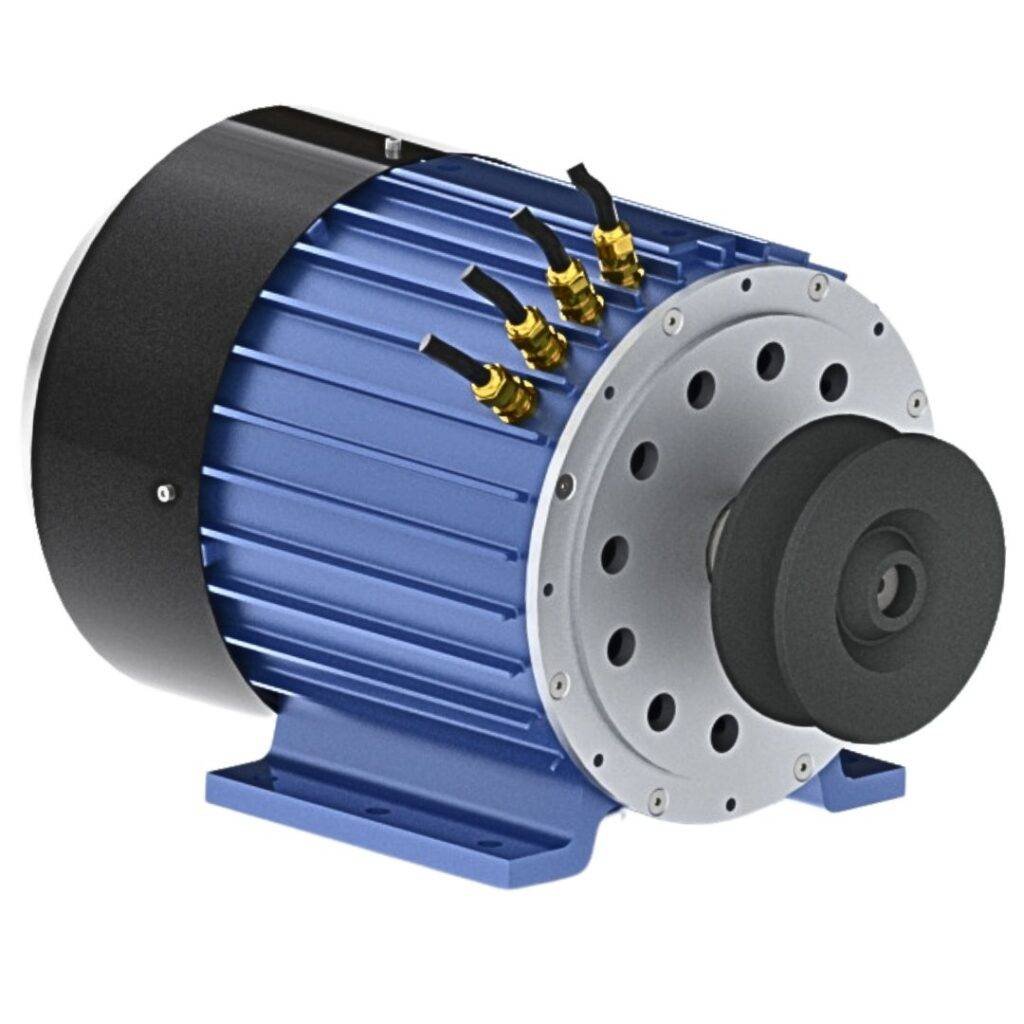
In an unpredictable world, reliable power isn't just a convenience – it's often a necessity, especially for those living off the grid, managing agricultural operations, or simply needing robust backup for unforeseen outages. When you're weighing your options for dependable, high-output electricity, a Power Take-Off (PTO) generator often emerges as a compelling contender. This comprehensive Buying Guide & Cost Considerations for PTO Generators will help you cut through the noise, equipping you with the expertise to make an informed, confident purchase that truly serves your needs.
Forget flimsy portable units or the high upfront cost of dedicated diesel generators. A PTO generator ingeniously leverages your existing tractor, transforming it into a powerful, mobile electrical station. But choosing the right one requires more than just picking the biggest number. It demands a clear understanding of your power demands, tractor capabilities, and long-term operational needs.
At a Glance: Your Quick Takeaways
- Tractor is Key: PTO generators run off your tractor's engine, making them fuel-efficient and cost-effective if you already own a compatible tractor.
- Versatile Powerhouse: Ideal for farms, remote worksites, emergency backup, and powering diverse equipment from welders to milking machines.
- Cost Savings: Expect acquisition and upkeep costs to be significantly lower (up to 50%) than comparable engine-driven diesel generators.
- Match HP to kW: A good rule of thumb is that 2 horsepower of tractor engine provides 1 kilowatt of electrical output.
- Power Calculation is Crucial: Accurately determine your peak and continuous wattage needs before anything else.
- Safety First, Always: Proper guarding, grounding, and operational procedures are non-negotiable for safe use.
- Maintenance is Simple: Regular lubrication, inspection, and proper storage extend the life of your unit.
Why PTO? Unpacking the Tractor-Powered Advantage
A PTO generator is a marvel of practical engineering, turning your tractor into a mobile power plant. It connects to your tractor's PTO shaft, typically spinning at 540 or 1000 RPM, and converts that rotational energy into usable electricity. This elegant solution eliminates the need for a separate engine and fuel system, simplifying operation and significantly reducing both acquisition and maintenance costs.
Imagine the freedom: running power tools at a remote fence line, keeping your livestock facilities operational during a grid outage, powering irrigation pumps deep in your fields, or simply ensuring your home stays lit and warm when the utility company lets you down. These machines excel in scenarios demanding high continuous output for extended durations, making them a favorite among farmers, ranchers, and anyone needing serious off-grid muscle. Learn more about the fundamentals of PTO generators and how they work.
While the benefits are substantial—including impressive fuel efficiency (leveraging your tractor's optimized engine), lower overall maintenance, and a robust power output suitable for long-duration tasks—it's also important to acknowledge their unique characteristics. They are, by definition, tractor-dependent, meaning you'll need your tractor available to generate power. Their portability, while excellent for moving across sites (especially trailer-mounted units), isn't meant for quick, independent mobility like a small inverter generator. And yes, they're not known for silent operation, a consideration if you're planning nighttime use near residential areas.
Understanding Your Power Needs: The First Crucial Step
Before you even start browsing models, you need a crystal-clear picture of what you intend to power. This isn't just about guessing; it's about calculating. Overestimate, and you waste money; underestimate, and you're left in the dark when you need power most.
Start by listing every single appliance, tool, or system you want your PTO generator to run simultaneously. For each item, note its running watts (the power it needs to operate continuously) and its surge watts (the extra burst of power it needs to start up, typically for motors). Common culprits for high surge wattage include air compressors, well pumps, refrigerators, and large electric motors.
Here's how to calculate your generator size:
- List all continuous loads: Add up the running watts for everything you expect to power simultaneously.
- Identify the largest surge load: Find the item with the highest surge wattage.
- Calculate total power needed:
- Total Running Watts = Sum of all continuous running watts.
- Peak Surge Watts = Total Running Watts - (Running Watts of the largest surging item) + (Surge Watts of the largest surging item).
- Example: If your running loads are 5,000 watts, and your well pump (which is part of that 5,000) requires an extra 2,000 watts to start (making its surge 3,000W while its run is 1,000W), your calculation would be: (5,000 - 1,000) + 3,000 = 7,000 peak surge watts.
- Add a 20% Headroom: Always add at least 20% to your peak surge wattage calculation for safety, future expansion, and to prevent overworking your generator. This headroom helps ensure your generator isn't constantly straining, which extends its lifespan and improves reliability.
General Power Output Guidelines:
- 10–25 kW: Perfect for basic farmstead operations, powering essential lights, small pumps, refrigeration, and a few hand tools. Think emergency home backup or light field work.
- 30–60 kW: This range is suitable for full-time agricultural operations, including milking machines, ventilation systems, grain augers, larger workshops, and substantial home backup.
- 75+ kW: Enters the industrial territory, capable of running multiple heavy-duty motors, large irrigation systems, welding equipment, or powering commercial-scale operations.
Remember, your tractor's horsepower directly dictates the generator's potential output. As a rough guide, a 100 HP tractor engine typically yields around 50 kW of electrical power. So, if you're eyeing a 75 kW generator, you'll need a considerably more powerful tractor than 100 HP.
Decoding PTO Generator Types: Which One Suits Your Operation?
PTO generators aren't one-size-fits-all. Their design and mounting style dictate their portability, efficiency, and ideal use cases. Understanding the differences is key to choosing the right fit.
Direct-Drive PTO Generators
The Workhorse: These units connect directly to your tractor's rear PTO shaft, typically mounting via a three-point hitch. They're designed for efficiency and compactness.
- Pros: High efficiency due to minimal power loss, compact footprint, typically lower maintenance thanks to fewer moving parts, and very robust for stationary or semi-permanent setups.
- Cons: Requires precise alignment with the PTO shaft, limiting placement options. The generator is directly behind the tractor, which can sometimes be inconvenient depending on the application.
- Best For: Permanent installations like a backup power source for a barn or home where the tractor can be regularly positioned, or for field applications where the generator needs to be close to the tractor.
Belt-Driven PTO Generators
The Flexible Option: Instead of a direct shaft connection, these generators use a belt-and-pulley system to transfer power from the PTO.
- Pros: Offers greater flexibility in positioning the generator relative to the tractor, reduces vibration transfer, and can be more forgiving with slight misalignments. The modular placement can be advantageous for specific setups.
- Cons: Less efficient than direct-drive models due to potential belt slippage, which means some power loss. Requires regular belt tension checks and eventual replacement.
- Best For: Scenarios where you need to place the generator a short distance away from the tractor, perhaps for noise reduction or better access to the generator's outlets.
Trailer-Mounted PTO Generators
The Mobile Powerhouse: These units come pre-mounted on a trailer chassis, complete with wheels and a hitch.
- Pros: Unmatched mobility, allowing you to easily transport your power source across multiple sites, fields, or properties. They're self-contained and ready to go wherever your tractor can pull them.
- Cons: Higher upfront cost due to the integrated trailer. Requires additional storage space when not in use.
- Best For: Commercial operations, contractors, or large agricultural enterprises that require reliable power at various remote locations on a regular basis.
Industrial-Grade Stationary Units
The Heavy-Duty Permanent Fixture: Designed for continuous, heavy-duty operation, these units are often larger, more robust, and integrated with advanced control features.
- Pros: Built for extreme durability and long service life, capable of continuous output under demanding conditions. Often includes features like automatic start-stop, remote monitoring, and advanced safety systems.
- Cons: Significantly more expensive, often requiring professional installation. Less portable (if at all).
- Best For: Large-scale farming operations, municipal utilities, or industrial facilities that need a dedicated, long-term backup power solution for critical infrastructure.
The Heart of the System: Tractor Compatibility Matters
Your PTO generator is only as good as the tractor powering it. Mismatching can lead to inefficiency, damage, or simply a lack of usable power. This isn't just about having a PTO shaft; it's about matching specifications.
PTO RPM Compatibility (Revolutions Per Minute)
The most critical compatibility factor is the PTO shaft speed. Tractors typically operate at one of two standard PTO speeds:
- 540 RPM: Common on smaller to mid-sized utility tractors.
- 1000 RPM: Found on larger, more powerful agricultural and industrial tractors.
Your generator must be designed for the same RPM as your tractor's PTO shaft. Many generators are switchable between 540 and 1000 RPM, offering versatility. Ensure the correct setting is selected before operation. Running a 540 RPM generator at 1000 RPM will severely damage it, and vice-versa will result in insufficient power.
Tractor Horsepower (HP) Requirements
The generator's output (kW) is directly proportional to the tractor's horsepower supplied to the PTO. The rule of thumb: 1 kW of generator output requires roughly 2 HP at the PTO shaft.
So, for a:
- 30 kW generator: You'll need at least 60 HP at the PTO (which generally means a tractor with 70-80 engine HP, accounting for drivetrain losses).
- 50 kW generator: Requires a minimum of 100 HP at the PTO.
- 100 kW generator: Demands a robust 200 HP+ tractor.
Always check the generator's manufacturer specifications for the minimum required PTO horsepower. Don't push your tractor beyond its comfortable operating limits; this can lead to premature wear and tear on both the tractor and the generator.
Hitch Class
For direct-drive and some trailer-mounted units, ensuring your tractor's three-point hitch (if applicable) matches the generator's mounting design is important for stability and proper connection. Most PTO generators will specify their hitch compatibility (e.g., Cat I, Cat II, or Cat III).
Key Specifications and Features: What to Look For Under the Hood
Once you understand your power needs and tractor capabilities, it's time to dive into the specifics of the generator itself. These features dictate performance, safety, and ease of use.
Power Output (kW or kVA) – The Bottom Line
This is the generator's core capability. You've already done the math, so now match it to the generator's rated output. Generators are often rated in kilowatts (kW) for real power (what runs your resistive loads like heaters and lights) and kilovolt-amperes (kVA) for apparent power (important for inductive loads like motors). For most practical purposes, especially for resistive and mixed loads, focus on the kW rating. Remember the 20% headroom you calculated!
Voltage Type – Matching Your Electrical System
The type of electricity your generator produces needs to match what your devices and buildings require.
- Single-Phase (120/240V): This is the standard for most residential homes, small shops, and many common appliances and tools. It's suitable for running lights, outlets, refrigerators, and smaller motors.
- Three-Phase (208V, 480V): Essential for industrial motors, heavy commercial equipment, large pumps, and sophisticated farm machinery. If you have large motors (typically 5 HP or more) that require three-phase power, you must select a three-phase generator. Trying to run a three-phase motor on single-phase power (even with converters) is inefficient and can damage the motor.
Many PTO generators offer both single-phase and three-phase output options, or are designed to be easily switched between them. Confirm the exact voltage and phase configuration you need.
Efficiency Rating – Getting the Most from Your Fuel
Look for units with an efficiency rating exceeding 90% for mechanical-to-electrical conversion. Higher efficiency means more of your tractor's horsepower is converted into usable electricity, reducing fuel consumption and operational costs. It's a key factor in the overall cost per kilowatt-hour over time.
Noise Level (dB) – A Factor for Comfort and Compliance
While no large generator is silent, some are quieter than others. Noise levels are measured in decibels (dB). For remote field work, it might not be a major concern, but if you're operating near homes, livestock, or during quiet hours, a lower dB rating is preferable. Check local regulations regarding noise pollution.
Enclosure Type – Protection from the Elements
If your generator will be used outdoors, a weather-resistant enclosure is crucial. This protects the internal components from rain, dust, and debris, extending the life of the unit and ensuring reliable operation in harsh conditions.
Transfer Switch Integration – Safe Connection to Your Building
A transfer switch is not an optional accessory; it's a critical safety device if you plan to connect your PTO generator to your home's or barn's electrical panel.
- Manual Transfer Switch: Requires you to physically switch your building's power from utility to generator (and vice-versa). This prevents dangerous backfeeding into the utility grid, which can injure utility workers.
- Automatic Transfer Switch (ATS): Detects a utility outage and automatically starts the generator, switches the load, and then reverses the process when utility power is restored. Industrial-grade PTO generators sometimes integrate with ATS systems, though it's less common for smaller, more mobile units.
Always have a qualified electrician install a transfer switch. This is not a DIY project.
Safety Features – Your Peace of Mind
Don't compromise on safety. A quality PTO generator will incorporate several critical safety features:
- Emergency Shut-offs: Readily accessible buttons to immediately stop the generator in an emergency.
- Protective Guarding: Shields over all exposed rotating shafts (especially the PTO driveline) to prevent entanglement injuries.
- Overload Protection: Circuit breakers or fuses that trip if the generator is overdrawn, protecting both the generator and your connected appliances.
- Grounding Provisions: Clear and robust connection points for proper grounding, essential to prevent electrical shock.
- UL/CSA Certification: Look for certifications from reputable electrical safety organizations like Underwriters Laboratories (UL) or the Canadian Standards Association (CSA). These indicate the unit has met rigorous safety standards.
A Step-by-Step Selection Guide: Navigating Your Purchase
With all the technical details in mind, let's put it into a clear, actionable sequence for selecting your ideal PTO generator.
- Determine Your Power Needs (Precisely): Calculate the total running watts and peak surge watts for everything you might ever want to power simultaneously. Add that crucial 20% headroom. This gives you your target kW rating.
- Verify Tractor Compatibility (Thoroughly):
- Confirm your tractor's PTO speed (540 or 1000 RPM).
- Determine its available PTO horsepower and ensure it meets or exceeds the generator's minimum HP requirement.
- Check hitch class if applicable.
- Select the Right Mounting Style:
- Direct-Drive: For dedicated, close-proximity use or fixed installations.
- Belt-Driven: If you need a bit more flexibility in generator placement.
- Trailer-Mounted: If mobility across different sites is paramount.
- Industrial: For large-scale, continuous, integrated systems.
- Evaluate Voltage Requirements: Are you running a residential panel and small tools (single-phase 120/240V) or large industrial motors (three-phase 208V/480V)? Ensure the generator can deliver the correct voltage and phase.
- Review Essential Safety Features: Look for clear guarding, accessible emergency shut-offs, overload protection, and solid grounding provisions. Prioritize units with UL/CSA certification.
- Assess Noise and Emissions: Consider your operating environment. While PTO generators are not silent, some designs are quieter than others. Check local regulations if operating near populated areas.
- Verify Warranty & Customer Support: A reputable brand will offer at least a 1-year warranty and accessible customer service. Long-term parts availability is also a major plus. Read reviews on product reliability and service.
- Avoid Red Flags: Be wary of unusually low prices, uncertified electrical components, vague power ratings (e.g., only listing "max power" without continuous), or a complete lack of safety certifications. If it seems too good to be true, it probably is.
The Investment: PTO Generator Cost Considerations (2024 Market Insights)
One of the most compelling arguments for a PTO generator is its overall value. While the initial investment might seem significant, it's often considerably more cost-effective than a comparable conventional generator, especially if you already own a tractor.
General Price Ranges (as of 2024):
- Small Units (10–25 kW): Expect to pay between $2,500–$5,000. These are excellent for basic farmstead backup, light workshops, or remote cabin power.
- Mid-Range Units (30–60 kW): These versatile workhorses typically fall into the $6,000–$12,000 range. This covers the needs of most average-to-large farms for emergency backup or significant remote power.
- Industrial Units (75+ kW): For serious continuous power demands, prices climb to $13,000–$25,000+, reflecting their robust construction and higher output.
Beyond the Sticker Price: Understanding True Cost
While upfront cost is a factor, savvy buyers compare the cost per kilowatt-hour over time. PTO generators shine here for several reasons:
- No Dedicated Engine: You're not paying for a separate engine, fuel system, or cooling system within the generator itself. Your tractor already provides these.
- Fuel Efficiency: Modern tractor engines are often highly fuel-efficient and optimized for long-duration running, which translates to lower operating costs for your generator.
- Lower Maintenance: With no separate engine to maintain (oil changes, spark plugs, air filters), the PTO generator itself requires significantly less upkeep than an engine-driven unit. This simplicity translates to substantial long-term savings.
- Acquisition & Upkeep Savings: As mentioned, PTO generators can be up to 50% cheaper to acquire and maintain compared to similarly powered diesel generators with their own engines.
Leading Manufacturers
While the market is diverse, some manufacturers are recognized for their quality and reliability in the PTO generator space. Brands like Morse Equipment, Peterson Power Systems, and Midwest Generator are often cited for their robust offerings and commitment to agricultural and industrial power solutions. Always research specific models and their track record.
Potential Hidden Costs
Remember to factor in a few additional expenses:
- Transfer Switch & Installation: This is a non-negotiable safety item for connecting to your building's electrical system. Budget for the switch itself and professional electrician fees.
- Heavy-Duty Cabling: For high-wattage generators, you'll need appropriate gauge extension cords or permanent wiring that can handle the load.
- Fuel Storage: While your tractor holds fuel, you'll want sufficient on-site storage for extended operations.
- Trailer (if not included): If you choose a non-trailer-mounted unit but still need mobility, you might need to purchase or adapt a utility trailer.
Beyond the Purchase: Maintenance, Safety, and Smart Setup
A PTO generator is a significant investment. Protecting that investment and ensuring its safe, efficient operation comes down to consistent maintenance, strict safety protocols, and proper setup.
Essential Maintenance for Longevity
The beauty of a PTO generator is its relative simplicity, but neglect can still lead to costly repairs.
- Lubrication: The PTO u-joints on the driveline are critical. Lubricate them religiously, ideally every 50 hours of operation or at least once a season.
- Inspect Regularly: Monthly, visually inspect all belts (if belt-driven) for tension and wear, check couplings for tightness, and ensure all protective shielding is intact and secure.
- Test Voltage Output: Quarterly, test the generator's voltage output under a small load to ensure it's operating within specified parameters.
- Proper Storage: When not in use, store your PTO generator in a dry, covered area, protected from harsh weather and rodents.
- Cleaning: Avoid regular water cleaning, which can damage electrical components. Wipe down the exterior with a dry or slightly damp cloth.
Non-Negotiable Safety Protocols
Operating any heavy machinery, especially one generating powerful electricity, demands respect and adherence to safety guidelines.
- Disengage PTO: Always disengage the PTO and shut down the tractor engine before approaching the driveline or performing any adjustments or maintenance on the generator.
- Appropriate Attire: Wear close-fitting clothing. Loose clothing, scarves, or long hair can easily become entangled in rotating shafts, leading to severe injury.
- Guarding is Essential: Never operate the generator without all proper guarding in place over the PTO shaft and any other exposed moving parts. If guards are missing or damaged, replace them immediately.
- Stable Connection: Ensure the generator is securely attached to the tractor with stable, wide bolts that can handle the twisting force of the PTO.
- Proper Grounding: Always ensure the generator chassis is properly grounded according to manufacturer instructions and local electrical codes. This is critical for preventing electrical shock.
Optimal Setup & Operation Tips
Getting the most out of your PTO generator involves more than just plugging it in.
- Level Ground: Ensure the PTO generator is set up on level ground. This ensures proper lubrication and efficient operation.
- Ventilation & Shelter: While weather-resistant, sheltering your generator from direct harsh weather (rain, intense sun) in a well-ventilated area is always a good idea. Adequate ventilation prevents overheating, especially for the tractor engine and the generator's alternator.
- Monitor Output: Don't rely solely on your tractor's tachometer to set generator speed. Use a reliable device that measures AC volts and hertz (Hz). A consistent 60 Hz is crucial for sensitive electronics.
- Load Application Strategy: When applying an electric load, first increase your tractor engine's lug until the generator reaches slightly above its target frequency (e.g., 62 Hz for a 60 Hz system). Then, slowly decrease the tractor RPM until the output voltage and frequency stabilize at the correct levels (typically 60 Hz). This ensures a smooth power delivery and prevents brownouts or over-frequency conditions.
- Pre-Load Check: Before connecting sensitive equipment, run a test load (like a work light) and confirm stable voltage and frequency.
Common Questions & Expert Answers
Let's address some of the questions that frequently arise when considering PTO generators.
Q: Are PTO generators truly more fuel-efficient than conventional generators?
A: Yes, generally. Your tractor's engine is designed for long, heavy-duty operation and often operates at an optimal RPM for fuel efficiency. A dedicated generator engine of comparable output might not be as efficient as a tractor engine designed for broader agricultural tasks. Leveraging an existing, optimized engine saves fuel.
Q: Can I run my whole house with a PTO generator?
A: Absolutely, assuming you've correctly sized the generator to your home's total electrical demand and have a properly installed transfer switch. Many PTO generators offer more than enough power (30-60+ kW) to comfortably power a large home, including major appliances like well pumps, HVAC systems, and electric stoves.
Q: What's the biggest mistake people make when buying a PTO generator?
A: The most common and critical error is underestimating power needs and tractor compatibility. People often guess their wattage, leading to an undersized generator, or they fail to properly match their tractor's PTO horsepower and RPM, resulting in poor performance or even damage. Accurate calculations and diligent compatibility checks are paramount.
Your Next Steps: Powering Up with Confidence
Choosing a PTO generator is a smart move for anyone seeking robust, reliable, and cost-effective power, particularly if a compatible tractor is already part of your equipment lineup. You've walked through the critical steps: assessing your power needs, understanding the different types and their ideal applications, ensuring tractor compatibility, and decoding the key specifications and features.
Now, take this knowledge, revisit your specific requirements, and begin to explore models from reputable manufacturers. Don't rush the process. A well-chosen PTO generator isn't just a piece of equipment; it's an investment in resilience, productivity, and peace of mind. Power up confidently, knowing you've made an informed decision.