The hum of a reliable generator can be the most comforting sound when the lights go out, or when you’re tackling a job far from the grid. But when it comes to choosing the right power solution, the decision often boils down to PTO Generators vs. Conventional Generators: A Comparison. It's not just about horsepower; it's about matching the right tool to your specific needs, whether that's powering a remote farm, keeping a business operational, or ensuring your home stays lit through a storm.
This isn't a simple "diesel vs. gas" debate anymore. Modern power solutions, including the ingenious PTO generator, offer distinct advantages and trade-offs. We’re here to cut through the jargon, giving you the insights you need to make an informed, confident choice.
At a Glance: Your Generator Choice Simplified
- Conventional Generators (Diesel & Gas): Built for standalone, dedicated power. Ideal for consistent, long-duration backup or prime power.
- Diesel Generators: Robust, globally fueled, excellent for heavy loads and extended runtimes, but can be noisier and have higher emissions without treatment.
- Gas Generators (Natural Gas/LPG): Cleaner, quieter, great for continuous applications with pipeline access, but often less torque for sudden heavy loads.
- PTO (Power Take-Off) Generators: Mobile, cost-effective for short, intermittent tasks by leveraging an existing tractor or vehicle engine. Not for continuous, unmanned operation.
- Key Decision Factors: Consider your duty profile (backup vs. continuous), load type, site constraints (emissions, noise), mobility needs, and total cost of ownership.
- No One-Size-Fits-All: The best generator is the one that perfectly aligns with your operational demands and logistical realities.
Powering Your World: Understanding the Core Need
In an increasingly electrified world, consistent power isn't a luxury; it's a necessity. From critical infrastructure like hospitals and data centers to agricultural operations and remote construction sites, the demand for reliable electricity often outstrips grid availability or even reaches beyond its reach entirely. This is where generators step in, offering independence and resilience. But with different generator types on the market, each boasting unique characteristics, how do you navigate the options? Let's break down the primary contenders.
The Contenders: Meet Your Generator Types
When we talk about generators, we're broadly categorizing them into two main camps: conventional standalone units and the more specialized PTO (Power Take-Off) models. Conventional generators, typically fueled by diesel or gas, are self-contained power plants. PTO generators, on the other hand, are mechanical marvels that tap into the engine power of an existing vehicle, usually a tractor, to generate electricity. Each has a distinct role to play.
Conventional Generators: The Workhorses of Reliable Power
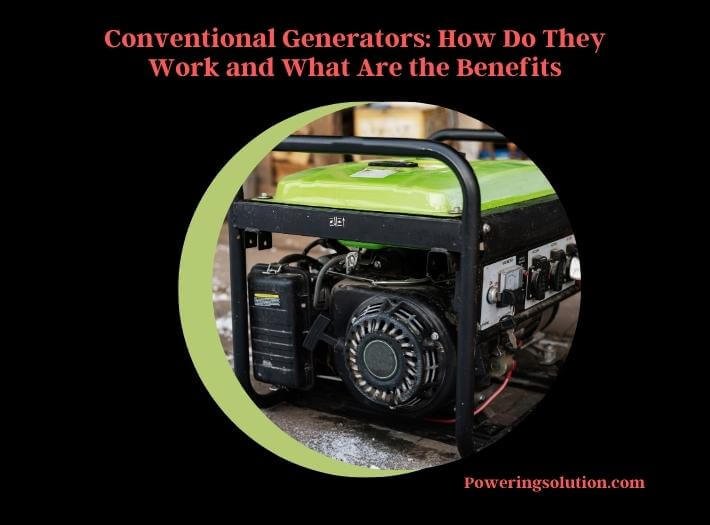
Conventional generators are what most people picture: a dedicated engine powering an alternator. They're designed to be the primary or backup power source, operating independently. Within this category, diesel and gas generators lead the pack, each with its own set of strengths and ideal use cases. Bestchoice.com, with its AI-driven ranking system, often highlights how these units are evaluated based on features, consumer reviews, popularity, and value for money, reflecting their widespread use across diverse applications.
Diesel Generators: The Rugged Powerhouses
When heavy-duty, long-duration power is required, diesel generators frequently come to mind. These units, as Tigotools.com's in-depth reviews confirm, are built for the toughest jobs.
- Operation: At their core, diesel generators use a compression-ignition engine to drive an alternator, fueled from on-site tanks. It's robust and straightforward.
- Performance: Known for their strong low-end torque, diesel generators excel at handling high start-up loads, like large motors. They offer a wide power range and stable voltage regulation thanks to modern governors and Automatic Voltage Regulators (AVRs).
- Fuel & Logistics: Diesel fuel is globally available, relatively easy to store on-site, and can be transported to virtually any remote location, making it incredibly versatile.
- Durability & Maintenance: These generators are engineered for heavy commercial duty, boasting impressive Time Between Overhauls (TBO). Maintenance typically involves fuel polishing, filter changes, injector care, and regular oil and coolant checks. They thrive under higher loads and extended runtimes.
- Operating Considerations: While potentially having higher fuel consumption per kW compared to optimized gas generators in some regions, their reliability and uptime often offset this. The need for fuel storage and periodic maintenance like fuel polishing adds to operational tasks.
- Safety & Emissions: Diesel engines produce higher NOx and particulate matter. To meet modern emission standards, many units now incorporate after-treatment systems like Diesel Particulate Filters (DPF) and Selective Catalytic Reduction (SCR). Safety protocols include bunding for refueling, spill prevention, and robust fire protection. They can also be quite noisy without proper enclosures.
- Footprint: Diesel generators offer flexible site placement, often skid-mounted or containerized, but require dedicated space for fuel tanks and spill containment.
- Best-Use Cases: Think hospitals, data centers (critical backup), industrial plants, large construction sites, remote mines, and long-duration prime power applications.
- Pros: Extremely robust, worldwide fuel availability, excellent for heavy and variable loads, ideal for long runtimes.
- Cons: Higher emissions (without treatment), can be noisier, and require more intensive fuel handling and maintenance.
Gas Generators (Natural Gas & LPG): The Cleaner, Quieter Option
For facilities connected to natural gas pipelines or those seeking cleaner operations, gas generators present a compelling alternative.
- Operation: These generators use a spark-ignited engine running on pipeline natural gas or bottled LPG, driving an alternator to produce electricity. They're often configured for automatic standby or continuous prime power.
- Performance: Modern gas gensets can effectively match diesel units for steady-state continuous loads. However, they've historically offered less torque for large inductive loads unless oversized. They perform optimally in constant-load environments.
- Fuel & Logistics: Natural gas requires a pipeline connection, making it excellent for urban facilities with a reliable utility supply. LPG offers portability with bottles but necessitates regular resupply. Fuel costs can be lower per kWh in pipeline markets, but availability is location-dependent.
- Durability & Maintenance: Cleaner combustion from gas generally leads to less particulate fouling and longer oil life. Maintenance focuses on ignition systems, valves, and gas control equipment. They can be sensitive to fuel impurities and fluctuations in pressure or flow. For effective long-term operation, understanding generator maintenance tips is key, especially for gas units.
- Operating Considerations: Lower emissions and potentially reduced fuel costs (with pipeline gas) can lower long-term operating externalities. Secure gas contracts and supply reliability are crucial.
- Safety & Emissions: Natural gas combustion is significantly cleaner, resulting in lower NOx and almost no particulates, making it easier to meet stringent urban emission limits. Pipeline connections require strict adherence to gas codes, including emergency shutoffs, leak detection, and proper ventilation. LPG storage also has specific regulatory requirements.
- Footprint: While they need a utility connection or LPG tank area, pipeline-fed units can be more compact as they don't require large on-site fuel tanks. Adequate ventilation and gas detection systems are vital.
- Best-Use Cases: Manufacturing facilities, large commercial complexes, municipal facilities with reliable pipeline access, low-emission urban backup power, and continuous prime power where clean and automatic operation is a priority.
- Pros: Cleaner emissions, quieter operation, excellent for continuous prime applications, and reliable with pipeline access.
- Cons: Fuel dependency on pipeline infrastructure or LPG logistics, potentially higher capital costs for gas controls, and historically less robust for high inrush loads.
PTO Generators: Harnessing Existing Horsepower
The PTO (Power Take-Off) generator is a unique solution that stands apart from conventional units. Instead of having its own engine, it cleverly utilizes the engine of an existing vehicle, most commonly a farm tractor, by coupling to its PTO shaft. This makes it a highly mobile and cost-effective option for specific scenarios. If you're looking for a deep dive into these specialized units, check out Your PTO driven generator guide.
- Operation: A mechanical shaft from a tractor or truck transfers rotational power to a generator unit, which then converts this mechanical energy into electricity. It’s a direct mechanical linkage.
- Performance: The generator's output performance is entirely dependent on the host vehicle’s engine size and the consistency of its PTO speed. They are excellent for short-duration high-power bursts and mobile tasks but are generally not designed for long, continuous duty unless the host vehicle is specifically rated for it.
- Fuel & Logistics: PTO generators use the host vehicle’s fuel (diesel or gasoline). This eliminates the need for separate fuel logistics for the generator itself. However, extended continuous operation can significantly stress the vehicle’s fuel capacity and accelerate its maintenance cycles.
- Durability & Maintenance: Maintenance is a shared responsibility between the generator unit and the host vehicle. Critical components include PTO couplings, the driveline, and proper engine load management. An improper match or excessive run duration can lead to accelerated wear on the vehicle's engine components.
- Operating Considerations: PTO generators are most economical when the host vehicle is dual-purpose (transport and power generation). They become less cost-effective if a dedicated vehicle must be kept solely for generator duty. They require constant supervision.
- Safety & Emissions: Emissions are tied directly to the host engine's type and its emission controls. Mechanical safety is paramount, requiring robust shaft guards, secure coupling locks, and precise PTO speed and torque control. The vehicle's stability during operation must also be carefully considered.
- Footprint: The generator unit itself has a minimal footprint, but you'll need adequate space for vehicle parking and a safe, accessible area for PTO hook-up.
- Best-Use Cases: Ideal for agriculture (powering irrigation pumps, grain handling equipment), mobile construction crews, disaster-response teams needing temporary power, and event power at locations where suitable vehicles are already present.
- Pros: Highly mobile, leverages existing vehicle assets, cost-effective for short-term or mobile power requirements.
- Cons: Not designed for continuous unmanned operation, involves mechanical coupling complexity, and depends entirely on the availability and condition of the host vehicle.
PTO vs. Conventional: A Head-to-Head Showdown
Deciding between a PTO generator and a conventional diesel or gas generator boils down to how you weigh several critical factors. There isn't a universally "best" option; only the best fit for your specific needs. Let's compare them across the most crucial aspects.
| Feature | PTO Generators | Conventional Diesel Generators | Conventional Gas Generators (NG/LPG) |
|---|---|---|---|
| Mobility | Highly mobile, moves with host vehicle | Typically fixed, containerized units offer some mobility | Typically fixed, containerized units offer some mobility |
| Fuel Logistics | Uses host vehicle's fuel; no separate storage | Dedicated fuel tanks, requires separate logistics | Pipeline connection or LPG bottle logistics |
| Operating Cost | Tied to vehicle fuel/maintenance, good for short runs | Fuel cost, routine maintenance, fuel polishing | Pipeline gas often cheaper, routine engine maintenance |
| Initial Investment | Lower for generator unit, leverages existing vehicle | Higher initial capital for standalone unit | Higher initial capital for standalone unit |
| Duty Cycle | Intermittent, short-duration, attended operation | Continuous, long-duration, unattended operation | Continuous, long-duration, unattended operation |
| Engine Source | Host vehicle's engine | Integrated dedicated diesel engine | Integrated dedicated spark-ignited engine |
| Emissions | Mirrors host vehicle's engine | Higher (unless treated), requires after-treatment options | Lower (especially NG), easier to meet regulations |
| Noise Levels | Dependent on host vehicle, generally louder | Can be high without enclosures | Generally quieter than diesel |
| Footprint | Minimal for generator, needs vehicle space | Dedicated space for unit and fuel | Dedicated space for unit, potentially less for fuel (NG) |
| Maintenance Burden | Shared with host vehicle, driveline focus | Engine, fuel system, filters, oil | Engine, ignition, gas system, filters, oil |
| Complexity | Mechanical coupling, RPM matching | Self-contained, ATS integration | Self-contained, ATS integration |
| The insights from Tigotools.com underscore that matching the generator type to your duty profile, site constraints, and long-term operating logistics is crucial for a cost-effective and reliable solution. For example, if you need to understand how to interpret generator specifications, the distinct requirements for each type become even clearer. |
Making the Right Choice: Key Decision Criteria
Choosing the right generator isn't about picking the most powerful or the cheapest; it's about making an intelligent investment that meets your specific requirements. Here's a deeper dive into the factors you need to consider:
1. Duty Profile: Backup vs. Prime/Continuous Power
- Backup-Only (Short Runs): For infrequent power outages at your home or a small business, where runtimes are measured in hours, not days. Simpler, smaller conventional units (gasoline or even smaller diesel) or a PTO generator for farm use might suffice.
- Prime/Continuous Power (Long Runs): For applications where the generator is the main power source, running for extended periods or continuously (e.g., remote construction, industrial operations, off-grid living). Diesel generators excel here due to their robustness and fuel efficiency under load. Gas generators are also strong contenders, particularly with pipeline access for continuous, clean operation.
2. Load Type: What Are You Powering?
- High Inrush Loads: Motors, compressors, and pumps require a significant surge of power (inrush current) to start. Diesel generators are generally better equipped to handle these large inductive loads efficiently due to their strong torque. If you opt for gas, you might need to oversize the unit.
- Sensitive Electronics: Computers, medical equipment, and sophisticated control systems require stable voltage and frequency. Ensure your chosen generator, regardless of type, has an advanced Automatic Voltage Regulator (AVR) and a stable governor to prevent damage to sensitive equipment. Inverter generators, often smaller, offer the cleanest power for such loads.
- Variable Loads: If your power demand fluctuates significantly, a robust diesel unit can adapt well. For gas generators, consistent loads are often preferred for optimal performance.
3. Site Constraints: Environment & Regulations
- Emissions Rules: Local and regional environmental regulations regarding NOx, particulate matter, and CO2 emissions can heavily influence your choice. Gas generators (especially natural gas) typically have lower emissions, making them easier to permit in urban areas. Diesel generators may require expensive after-treatment systems.
- Noise Limits: If the generator will be near residential areas or noise-sensitive zones, quiet operation is paramount. Gas generators are generally quieter than diesel, and both can be enclosed to reduce noise. PTO generators' noise levels are tied to the host vehicle and are often quite high.
- Fuel Storage Regulations: Storing large quantities of diesel, LPG, or even having a natural gas pipeline connection comes with strict safety and zoning regulations. Plan for appropriate spill containment, ventilation, and fire protection. Consider different fuel storage solutions as part of your overall plan.
4. Mobility Needs: Does Your Power Have to Move?
- Fixed Installation: If your power needs are confined to a single location (e.g., a home, factory, data center), conventional diesel or gas generators are the practical choice. They are designed for permanent or semi-permanent setups.
- Mobile Power: For applications where power needs to move from one site to another (e.g., construction sites, agricultural fields, emergency response), a PTO generator is highly compelling. It leverages an existing vehicle, making it inherently mobile without needing its own transport chassis.
5. Total Cost of Ownership (TCO): Beyond the Sticker Price
Don't just look at the upfront purchase price. Consider the long-term costs:
- Fuel Consumption & Cost: Diesel might be more expensive per gallon but more efficient under heavy load. Natural gas might be cheaper per kWh if on a pipeline. LPG costs fluctuate.
- Maintenance: Factor in routine servicing, parts replacement (filters, oil, spark plugs for gas, injectors for diesel), and labor costs. PTO generators share maintenance with the host vehicle.
- Emissions Compliance: The cost of after-treatment systems for diesel or obtaining specific permits can add significantly to TCO.
- Uptime & Reliability: Downtime costs money. Invest in a generator type known for reliability in your intended application. Bestchoice.com's AI ranking often factors in long-term reliability through consumer feedback, providing valuable insights here.
By carefully evaluating these criteria, you can move past generic recommendations and zero in on the generator solution that truly serves your needs.
Beyond the Specs: What Else Matters?
While power ratings and fuel types are critical, a truly informed decision considers the broader operational landscape.
Reliability and Uptime
Ultimately, a generator's value is in its ability to deliver power when needed. For critical applications, this means robust components, proven track records, and readily available service. Diesel generators are often championed for their inherent robustness and long lifespan. Gas generators, especially when connected to a reliable pipeline, can offer excellent continuous uptime with proper maintenance. PTO generators, while reliable for their intended use, depend on the host vehicle's health and continuous supervision.
Safety Considerations
Operating any generator involves inherent risks.
- Carbon Monoxide (CO): All internal combustion engines produce CO. Generators must be operated in well-ventilated areas, far from windows and doors. CO detectors are non-negotiable for indoor areas potentially affected.
- Fuel Handling: Diesel requires spill containment. LPG needs secure, ventilated storage. Natural gas lines demand robust connections, leak detection, and emergency shutoffs.
- Mechanical Safety (PTO): PTO shafts can be extremely dangerous. Proper guarding, secure couplings, and adherence to manufacturer instructions are vital to prevent severe injuries. For commercial operations, understanding and adhering to noise and emissions regulations is not just about compliance, but also about safety and good neighbor policies.
Modern Controls & Automation
Today's generators are smarter than ever. Look for features like:
- Automatic Transfer Switches (ATS): For backup power, an ATS automatically detects power outages, starts the generator, transfers the load, and reverses the process when grid power returns.
- Load-Sharing Capabilities: For multi-generator setups, this ensures optimal efficiency and redundancy.
- Remote Monitoring: Allows you to check generator status, fuel levels, and receive alerts from anywhere, crucial for unattended installations or comprehensive emergency power planning.
These advanced features significantly enhance convenience, safety, and the overall effectiveness of your power solution.
Common Questions About Generators
We've covered a lot, but a few questions consistently pop up.
How do I size a generator correctly?
Generator sizing is one of the most critical steps. It involves calculating your total running wattage, identifying your largest starting (inrush) loads, and then adding a buffer. Undersizing can lead to frequent overloads and equipment damage, while oversizing wastes money and can cause wet stacking in diesel units (unburnt fuel accumulating in the exhaust). Always consult a professional or use a reliable sizing calculator to ensure you meet both continuous and surge power demands.
Are PTO generators less reliable than conventional ones?
Not necessarily "less reliable," but they are differently reliable. A PTO generator's reliability is intertwined with the host vehicle's engine and the operator's attention. If the tractor is well-maintained and the PTO generator is used within its design parameters (e.g., not for continuous, unattended operation), it can be extremely reliable for its intended mobile, intermittent tasks. Conventional generators offer reliability through their self-contained, often purpose-built engines designed for long, continuous runtimes.
Your Next Steps: Powering Up Smart
Choosing between a PTO generator and a conventional diesel or gas unit doesn't have to be overwhelming. By systematically evaluating your needs against the distinct advantages of each type, you'll arrive at the most effective solution.
Here's an actionable checklist to guide your final decision:
- Confirm Your Duty Cycle: Are you looking for occasional backup, regular prime power, or continuous operation? This is the fundamental question.
- Verify Your Load Requirements: Calculate both your running and starting (inrush) kW. Identify any sensitive electronics that require clean, stable power.
- Check Local Regulations: Understand emission limits, noise ordinances, and fuel storage codes in your area.
- Plan Your Fuel Logistics: Assess fuel availability, storage needs, and resupply strategies for your chosen fuel type.
- Assess Maintenance Capability: Do you have access to mechanics skilled in diesel, gas engines, or specific vehicle maintenance for PTO units?
- Evaluate Site Constraints: Consider available space, ventilation requirements, and any aesthetic concerns.
- Factor in Safety Systems: Ensure your chosen setup includes necessary safety features like CO/gas detection, spill containment, and proper guarding.
- Consider Total Cost of Ownership: Look beyond the purchase price to include fuel, maintenance, and potential compliance costs over the generator's lifespan.
Whether you decide on the robust longevity of a diesel, the clean efficiency of a gas unit, or the ingenious versatility of a PTO generator, your goal is consistent: reliable power, when and where you need it. Make an informed choice, and power on with confidence.