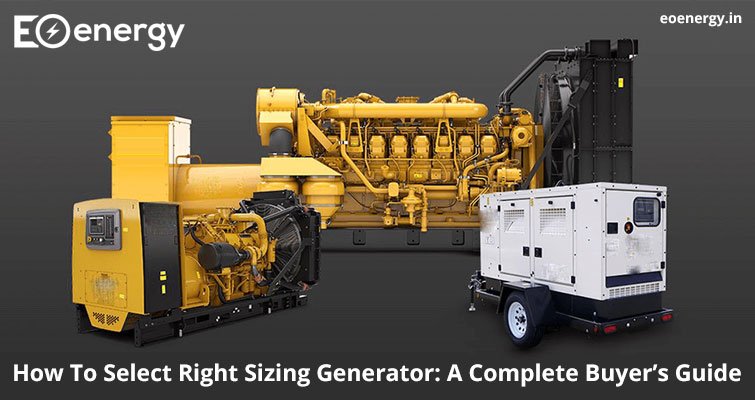
When the grid goes down, or you're miles from a power outlet on your farm, a Power Take-Off (PTO) generator can be an absolute lifesaver. It’s a robust, reliable, and cost-effective way to generate electricity using your tractor as the engine. But here’s the rub: getting the most out of this versatile equipment hinges entirely on correctly Sizing & Selecting the Right PTO Generator for your specific tractor and power needs. Dive in, and we'll demystify the process.
At a glance:
- Tractor HP is Key: Your tractor's horsepower directly determines the generator's kilowatt output (roughly 2 HP per 1 kW).
- Know Your Loads: Differentiate between starting (surge) watts and running (continuous) watts for all your equipment.
- Match RPM: Ensure your generator's RPM (540 or 1,000) aligns with your tractor's PTO shaft speed.
- Single or Three-Phase: Most homes and small farms use single-phase; larger, industrial equipment often requires three-phase.
- Factor in Features: Consider portability, safety features, circuit breakers, and receptacles.
- Always Oversize Slightly: A little extra capacity prevents overload and extends generator life.
Why a PTO Generator is a Farm's Best Friend
Imagine a sudden power outage during milking, or needing to power a welder out in the back forty without running hundreds of feet of extension cords. That's where a PTO generator shines. Unlike conventional portable generators that come with their own dedicated engine, a PTO generator cleverly leverages your existing tractor's engine to produce electrical power. Your tractor supplies the muscle, and the PTO unit acts as the alternator, converting mechanical energy into usable electricity. They're primarily deployed for critical farm and ranch operations, providing backup for homes, outbuildings, irrigation systems, and powering remote tools.
This setup offers distinct advantages: you're utilizing an engine you already own and maintain, often one that's designed for heavy-duty, continuous operation, making PTO units a durable and economical choice for serious power needs.
The Golden Rule: Your Tractor's HP Dictates Generator kW Output
This is the absolute bedrock of PTO generator sizing. You can’t just pick any generator and expect it to work efficiently with your tractor. The core principle is straightforward: your tractor's horsepower (HP) directly limits the kilowatt (kW) output your generator can produce.
Think of it this way: your generator requires a certain amount of mechanical energy from the tractor to spin its internal components and generate electricity. As a general rule of thumb, you need approximately 2 HP from your tractor to produce 1 kW of electricity from the generator.
What does this mean for you? If your tractor has 50 HP available at the PTO shaft, your maximum theoretical generator output would be around 25 kW (50 HP / 2 HP per kW = 25 kW). It's crucial to understand that your generator's maximum kW rating should always be half (or less) of your tractor's PTO horsepower. Going above this ratio means your tractor will be constantly strained, leading to inefficiencies, excessive wear, and potential damage to both your tractor and the generator.
Always check your tractor's specifications for its rated PTO horsepower, not just engine horsepower, as there can be a difference. This is the figure you'll use for your calculations.
Demystifying Your Power Needs: Starting vs. Running Watts
Before you even glance at generator models, you need a clear picture of what you intend to power. This requires a bit of detective work into the electrical demands of your appliances and tools.
Every electrical item has two wattage ratings:
- Running Watts (or Continuous Watts): This is the power an appliance needs to operate consistently once it's running. It's usually listed on the appliance's data plate.
- Starting Watts (or Surge Watts): Many motors, especially those in refrigerators, pumps, air compressors, and power tools, require a brief surge of extra power to kickstart their operation. This starting wattage can be 2-3 times higher than their running wattage.
How to Calculate Your Total Wattage:
To size your generator effectively, you'll need to create a list of all the essential items you plan to power simultaneously. - List all appliances: Prioritize what you must power during an outage or when working remotely.
- Find running watts for each: Check the appliance's label, manual, or search online.
- Identify items with starting watts: These are typically motor-driven appliances.
- Calculate total running watts: Add up the running watts of all items you'll run at once.
- Calculate the highest single starting wattage: Find the appliance with the largest starting wattage on your list. You only need to account for one starting surge at a time, as appliances rarely start simultaneously.
- Add total running watts + highest single starting watts: This sum gives you the minimum surge wattage your generator needs to handle.
Example Scenario:
- Well Pump: 1,500 running watts, 4,500 starting watts
- Refrigerator: 800 running watts, 2,000 starting watts
- Lights & Small Appliances: 1,000 running watts
- Heater Fan: 1,200 running watts
Calculation: - Total running watts: 1,500 + 800 + 1,000 + 1,200 = 4,500 running watts
- Highest starting watts: Well Pump at 4,500 watts (refrigerator is 2,000, so pump is higher).
- Required Generator Output: 4,500 (running) + 4,500 (starting surge) = 9,000 total surge watts
Therefore, you'd need a generator capable of at least 4.5 kW continuous power and 9 kW surge power. Always add a 10-20% buffer to your calculations to account for unforeseen needs and prevent overloading. Home Depot's guide on choosing generator size offers a helpful perspective on balancing these figures for various scenarios.
Beyond Kilowatts: RPM, Electrical Phase, and Other Critical Considerations
Sizing isn't just about raw power. Several other factors play a crucial role in matching the right PTO generator to your setup.
Matching Your Tractor's RPM
PTO shafts typically operate at one of two speeds: 540 RPM or 1,000 RPM. It's absolutely critical that your PTO generator matches the RPM of your tractor's PTO shaft.
- 540 RPM: Commonly found on older, smaller, or mid-sized tractors.
- 1,000 RPM: More prevalent on modern, larger, and higher-horsepower tractors. Many modern tractors are designed to handle both, often with a reversible shaft or selectable gear.
Attempting to run a 540 RPM generator at 1,000 RPM (or vice-versa) will lead to catastrophic damage to the generator, the tractor's PTO, or both. Always verify your tractor's PTO speed and select a generator that explicitly matches it.
Single-Phase or Three-Phase Electricity?
This is a fundamental choice dictated by the equipment you'll be powering:
- Single-Phase: This is the standard power delivery for most residential homes, small businesses, and typical farm outbuildings. Your wall outlets provide single-phase power. If your primary need is backup power for your home, lights, refrigerators, common power tools, and most farm appliances, a single-phase PTO generator will suffice.
- Three-Phase: If you operate large industrial motors, commercial pumps, heavy-duty welders, or specific agricultural machinery that requires higher voltage than a standard wall socket, you'll likely need a three-phase generator. Three-phase power delivers more constant and efficient power for heavy loads. Always check the electrical requirements of your specific high-demand equipment.
Portability and Mounting Options
PTO generators come in various configurations:
- Trailer-Mounted: Ideal for moving the generator around your property, especially to remote fields. These often have their own axles and hitches.
- Three-Point Hitch Mounted: Designed to attach directly to your tractor's rear three-point hitch, making it easy to transport and position.
- Skid-Mounted: These are stationary units, often placed on a concrete pad or a permanent location. They're typically heavier-duty.
Consider how often and how far you'll need to move your generator. Will it primarily stay in one spot, or will it be a mobile power station for field work?
Essential Features and Safety Measures
Don't overlook these critical aspects:
- Circuit Breakers: Essential for protecting the generator and your connected appliances from overloads and short circuits.
- Receptacles: Ensure the generator has the correct type and number of outlets (e.g., 120V, 240V, 50A, 30A) to match your power cord and transfer switch requirements.
- Voltage Regulation: Automatic Voltage Regulation (AVR) is important for sensitive electronics, providing stable power output.
- Frequency Meter: Helps you ensure the tractor's RPM is correctly set to maintain the standard 60 Hz frequency (in the US).
- Overload Protection: Beyond circuit breakers, some generators have additional features to prevent damage from excessive loads.
- Safety Guards: Ensure all rotating parts, especially the PTO shaft, are properly guarded.
Step-by-Step: Sizing Your PTO Generator
Let's put it all together into a clear action plan.
- Determine Your Absolute Power Needs (Running & Starting Watts):
- List every appliance, tool, or system you want to power.
- Find the running watts for each.
- Identify the starting watts for motor-driven items.
- Calculate total running watts + the single highest starting wattage. Add a 10-20% buffer for safety. This gives you your required kW rating (continuous) and kVA rating (surge).
- Self-check: If your total needs are, say, 15 kW continuous and 25 kVA surge, write these down.
- Verify Your Tractor's PTO Horsepower:
- Consult your tractor's owner's manual or data plate.
- Find the rated PTO horsepower (HP). This is crucial.
- Self-check: If your tractor has 40 PTO HP.
- Calculate Required Tractor HP for Your Generator Output:
- Using the 2 HP per 1 kW rule, multiply your required generator continuous kW by 2.
- Example: If you need a 15 kW generator, you'd need 15 kW * 2 HP/kW = 30 HP.
- Compare: Does your tractor's PTO HP meet or exceed this? (e.g., 40 PTO HP tractor > 30 HP needed. Good!)
- Confirm Your Tractor's PTO RPM:
- Again, check your tractor's manual. Is it 540 RPM or 1,000 RPM?
- Self-check: My tractor is 540 RPM.
- Identify Required Electrical Phase:
- Do you need single-phase (most common for homes/small farms) or three-phase (for heavy industrial motors)?
- Self-check: I only need single-phase for my home and barn.
- Consider Other Factors:
- Portability requirements (trailer, 3-point hitch, stationary).
- Desired receptacles and voltage outputs.
- Essential safety features (breakers, GFCI outlets if needed, robust guards).
- Budget.
- Select a Generator that Meets All Criteria:
- Look for a PTO generator with a continuous kW rating that meets your calculated need, and a surge kVA rating that can handle your highest starting load.
- Ensure its required input HP is less than or equal to your tractor's PTO HP.
- Crucially, match the RPM and electrical phase.
- Evaluate included features and build quality.
By following these steps, you'll significantly narrow down your options and make an informed decision. Don't be afraid to Explore PTO driven generators from reputable manufacturers once you have your specifications locked down.
Making the Final Choice: Factors Beyond Pure Power
Once you've nailed down the technical specifications, consider these practical aspects to ensure you're making a wise investment.
Brand Reputation and Durability
Not all generators are created equal. Research brands known for reliability and customer support in the agricultural sector. A PTO generator is a significant investment; you want one built to withstand the rigors of farm life. Look for heavy-duty construction, robust gearboxes, and quality components.
Warranty and Service
What kind of warranty does the manufacturer offer? How accessible are parts and service in your area? A strong warranty and readily available service network can save you headaches and costly downtime down the road.
Noise Level
While your tractor will be the primary noise source, some generators are inherently louder or quieter than others. If the generator will be operating near your home or where noise is a concern, check reviews or specifications for sound levels.
Ease of Connection and Operation
A well-designed PTO generator should be relatively easy to hook up and operate. Look for clear instructions, accessible controls, and convenient connection points.
Fuel Consumption of Your Tractor
Remember, your tractor is the engine. The larger the generator and the heavier the load, the more fuel your tractor will consume. While not a selection criterion for the generator itself, it's a running cost to be aware of.
Common Pitfalls to Avoid When Buying a PTO Generator
Even with the best intentions, it's easy to stumble. Steer clear of these common mistakes:
- Under-Sizing the Generator: This is perhaps the most frequent error. If your generator is too small for your actual needs, you'll constantly trip breakers, damage appliances, or severely strain the generator, leading to premature failure. Always factor in that 10-20% buffer.
- Ignoring Starting Watts: Failing to account for the brief, high surge of power required by motor-driven appliances can lead to frustrating situations where your generator can run an item but can't start it.
- Mismatched PTO RPM: As discussed, this is a non-negotiable match. A 540 RPM generator must go with a 540 RPM PTO shaft, and similarly for 1,000 RPM.
- Neglecting Electrical Phase Requirements: Plugging a three-phase motor into a single-phase generator (or vice-versa, attempting to draw single-phase from a three-phase output without proper wiring) can cause serious damage or simply won't work.
- Buying Based Purely on Price: While budget is important, compromising on quality or necessary features to save a few dollars upfront can lead to higher long-term costs in repairs, replacements, or inadequate performance.
- Overlooking Safety Features: Adequate circuit protection, proper grounding, and physical guards are non-negotiable for safe operation.
Ready to Power Up? Your Next Steps
Choosing the right PTO generator is a strategic decision that empowers your farm or ranch with reliable, independent power. By systematically evaluating your power requirements, understanding your tractor's capabilities, and considering the technical specifications like RPM and electrical phase, you're well on your way to making a smart investment.
Don't rush the process. Take the time to accurately calculate your wattage needs, confirm your tractor's PTO specs, and explore reputable brands. With the right PTO generator hooked up to your trusty tractor, you'll be prepared for anything – from unexpected outages to demanding remote power tasks. Your farm’s operational continuity and peace of mind are worth every bit of careful planning.